

TellTide is a SaaS product for collecting customer feedback. In the twelve months before its blog started, its website recorded 35 Google Search impressions. SEO Dispatcher's TellTide case study reports 8,377 impressions in the 90 days leading up to 3 October 2026.
That is a meaningful change in visibility. It is not a claim that 8,377 people visited TellTide, that every impression came from a blog post, or that SEO Dispatcher alone caused the increase. Here is what the available evidence shows, what the publishing workflow looked like, and what to check next.
Read the dates before comparing the numbers
The baseline covers June 2025 through May 2026, a full twelve months. TellTide began its blog in June 2026. The later 8,377 figure covers a rolling 90-day period captured on 3 October 2026. Those are different lengths of time, so they should not be presented as a like-for-like growth rate.
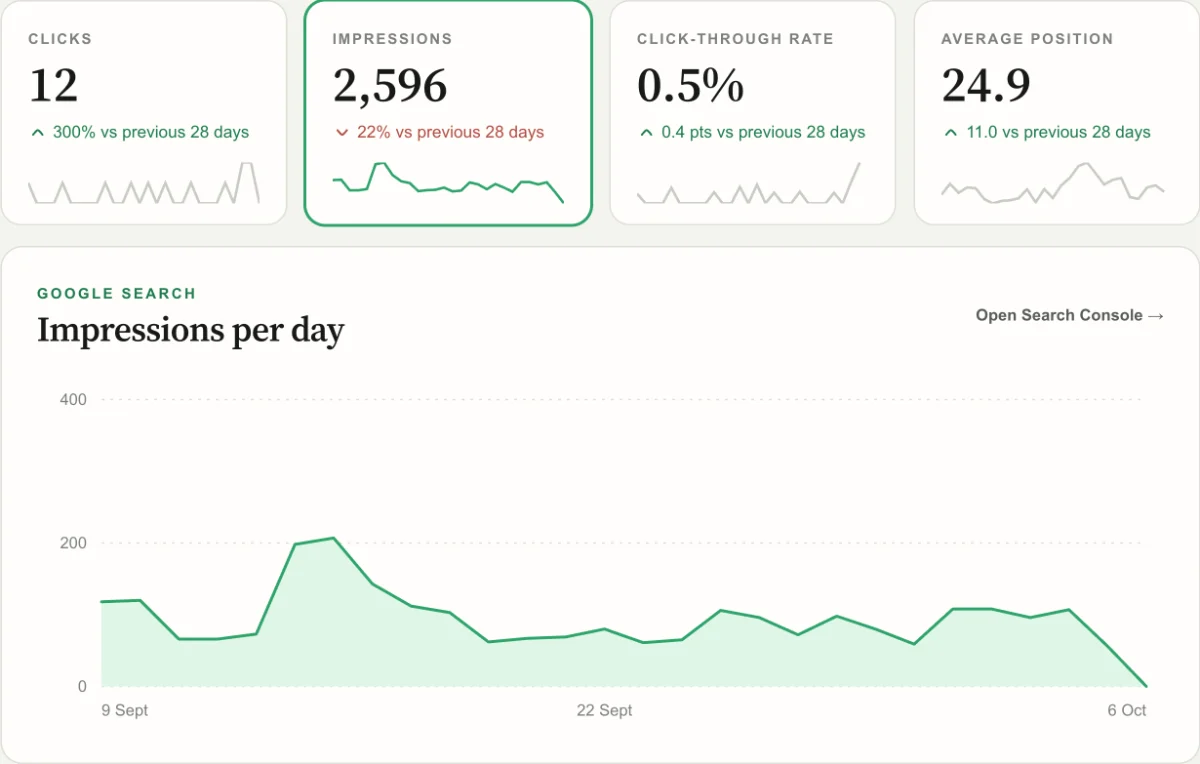
The Search Console monthly figures displayed on our homepage provide a more useful view of the change:
| Period | Google Search impressions |
|---|---|
| June 2025–May 2026, combined | 35 |
| June 2026 | 152 |
| July 2026 | 1,442 |
| August 2026 | 3,597 |
| September 2026 | 3,191 |
The July–September calendar months total 8,230 impressions. They do not equal the rolling 90-day figure of 8,377 because the windows have different boundaries. The source is TellTide's sc-domain:telltide.com Search Console property, captured for the homepage on 3 October 2026.
Google defines an impression as a counted appearance of a link to your site in Search. A click is a separate action. Neither number tells you whether a visitor became a customer.
The workflow behind one published article
The saved product screens show a workflow that begins with TellTide's own Search Console data. SEO Dispatcher displays searches and pages that already have impressions, then profiles the website and reviews an audit before preparing content. A search phrase alone is not treated as a reason to publish: the question still has to fit the product and the reader.
For a concrete publishing example, SEO Dispatcher opened pull request #7 on 24 July 2026 for TellTide's article about who buys in-app feedback tools. The homepage records an MDX file in TellTide's existing content folder, a reviewed pull request, and a live article on the same day. This example shows a real path from draft to repository file; it does not establish that every TellTide article followed the same steps.
That distinction matters for code-backed sites. A good draft is only part of the job. Its file path, frontmatter, links, and live URL have to work with the website that publishes it. The GitHub blog setup guide explains those pieces if you are building a similar site.
What the query mix suggests
The homepage reports that 98.5% of the 90-day impressions came from searches without TellTide's brand name. It also reports 72% from searches containing “alternatives” or “vs.” These are impressions, not clicks or customers.
The first figure suggests TellTide was being shown beyond people already searching for its name. The second suggests comparison questions were a large part of its visibility. That is useful editorial context: someone comparing feedback tools needs a clear explanation of fit, trade-offs, and evidence, not a generic paragraph repeating “best feedback tool.”
These figures do not tell us which specific page won each appearance or whether a comparison search led to a sign-up. To answer those questions, inspect the Queries and Pages views together in Search Console, then check visits and completed actions separately. Our measurement guide walks through that review.
What this case does not prove
The visibility increase happened after the blog began, but timing alone cannot isolate its cause. New pages, changes to existing pages, search demand, competing results, and Google's own processing can all affect impressions. The homepage also notes that many of TellTide's searches still appeared on later results pages when the snapshot was taken. More impressions are an opportunity to investigate, not a promise of traffic.
For this case, the next useful measures are relevant clicks, the pages receiving those clicks, and whether visitors complete a meaningful action. A comparison article might answer a buyer's question well yet bring few visits if it is still far down the results. A page with many visits might still need a clearer product explanation. Search Console and analytics answer different parts of that story.
How to run a similarly honest review for your site
- Record a baseline. In Search Console, save the date range, search type, clicks, impressions, and filters you used. Keep the original counts, especially when they are small.
- Find a relevant question. Inspect queries and the pages shown for them. Choose a search your business can answer with first-hand detail. The Search Console blog-ideas guide explains how to avoid writing another page your site does not need.
- Check the existing answer. Read the current page and search results. Improve a page when it already serves the reader's task; write a new article when the task is distinct.
- Review before publishing. Verify facts, examples, links, title, description, and the file your website will build. A pull request gives your team a concrete change to inspect.
- Measure the next stage. Confirm the URL is live, then compare the same page and queries over comparable periods after enough data collects. Move from impressions to relevant clicks and, where you track them reliably, useful business actions.
SEO Dispatcher can connect the search evidence, website audit, draft, and GitHub publishing step for a Markdown or MDX site. You still decide what is true about your product and whether the finished article helps the reader. TellTide's early numbers show why that workflow is worth examining; the next review must show what the visibility actually brought to the business.