
A typical AI blog writer
guesswork- Topics from a generic keyword database
- The same outline template for every site
- Posts published on autopilot
- Measured by how many articles went out
SEO Dispatcher reads your Google Search Console, drafts posts in your
site’s own format, and ships them to your GitHub repo.







Case study · TellTide
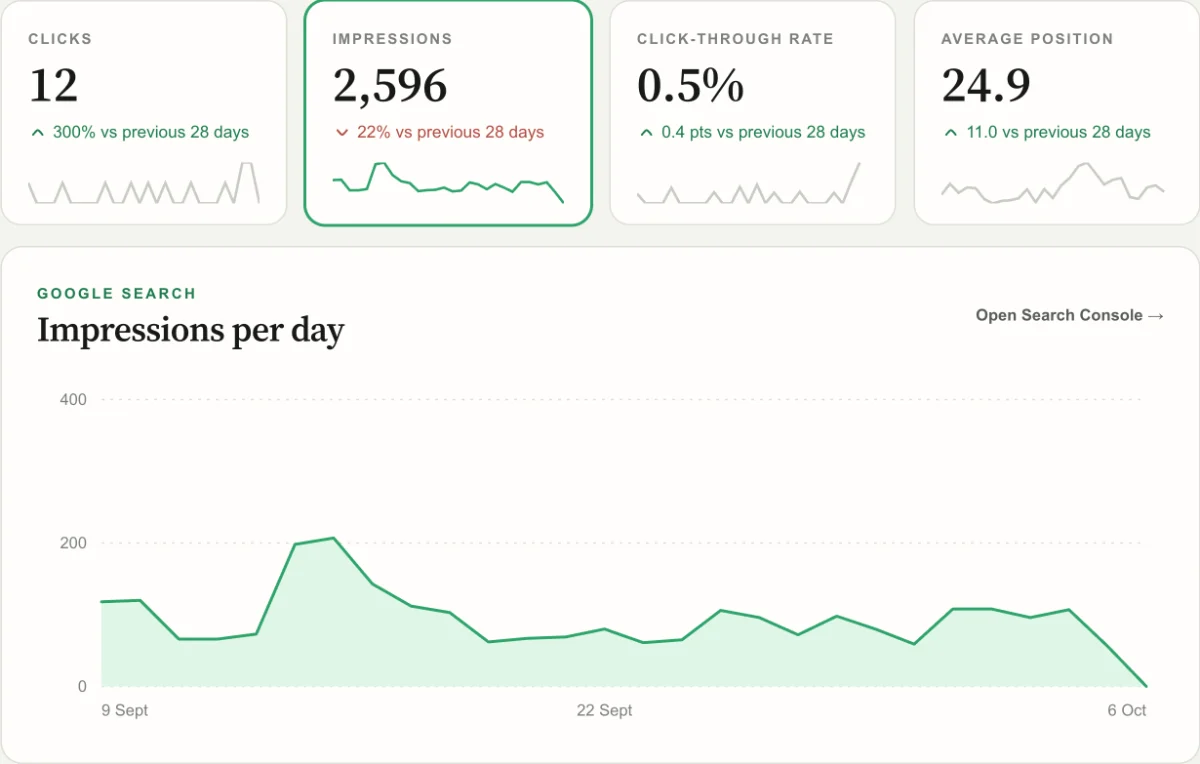
TellTide, a customer-feedback tool, started a blog planned from its own Search Console data in June 2026. Monthly impressions in Google Search:
Clicks come next: most of these searches still rank on pages two to six, and moving them up is the work in progress.
How it works
Connect Google Search Console and GitHub once. These are TellTide’s real screens, with a demo account.
Clicks, impressions, click-through rate and average position for the last 28 days, each compared with the 28 before.
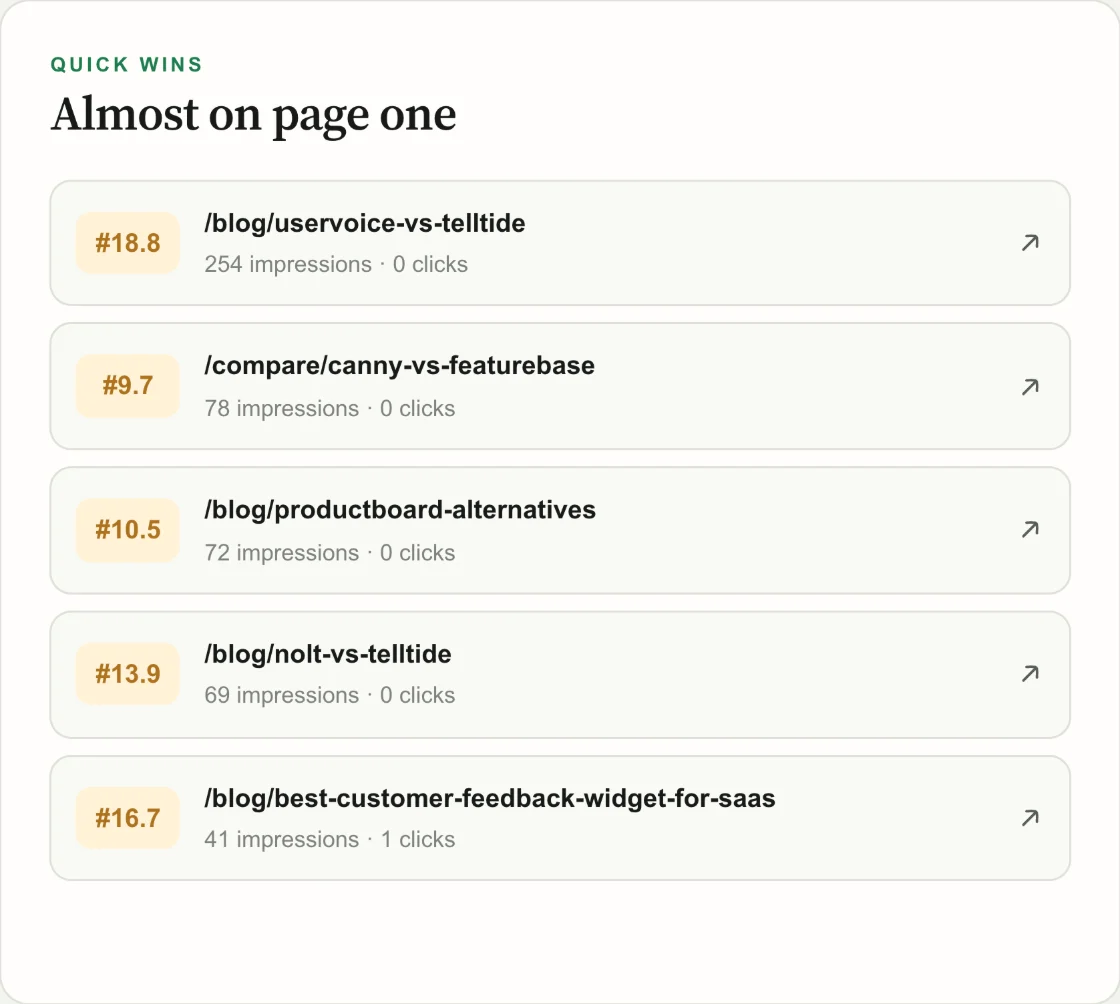
Pages sitting at positions 8 to 20 in Google, where one better post can move them onto page one.
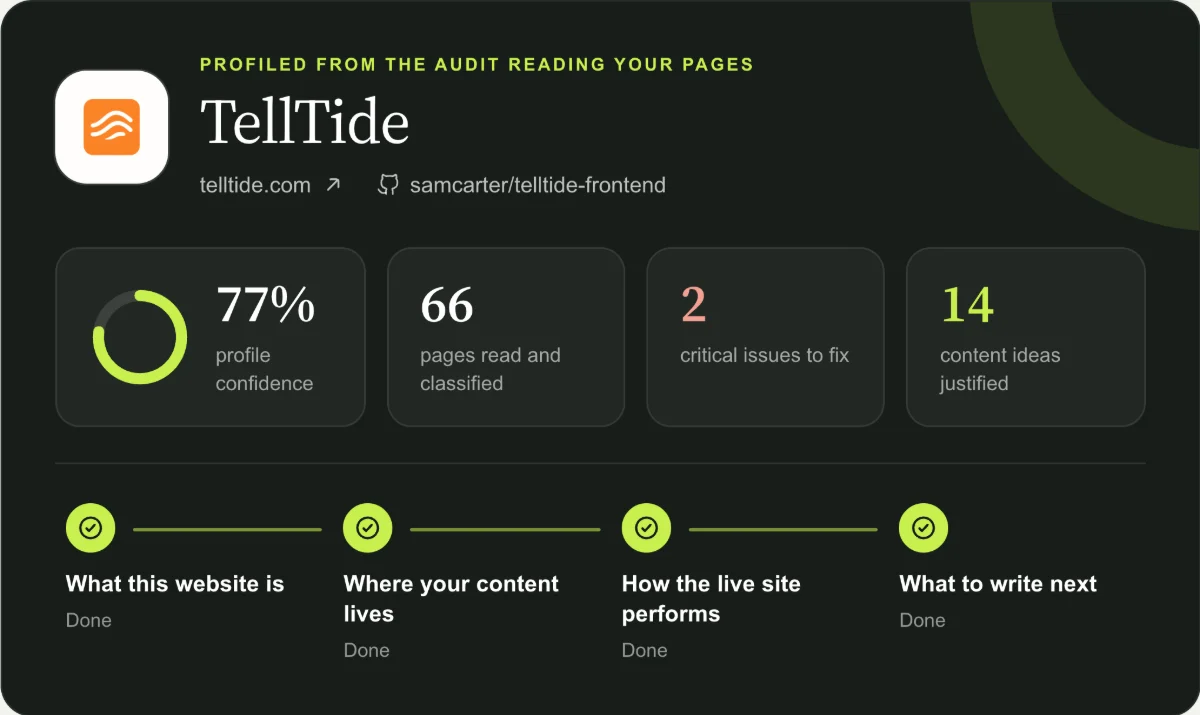
It reads your pages, finds where posts live in your repo, and gives a reason for every idea it suggests.
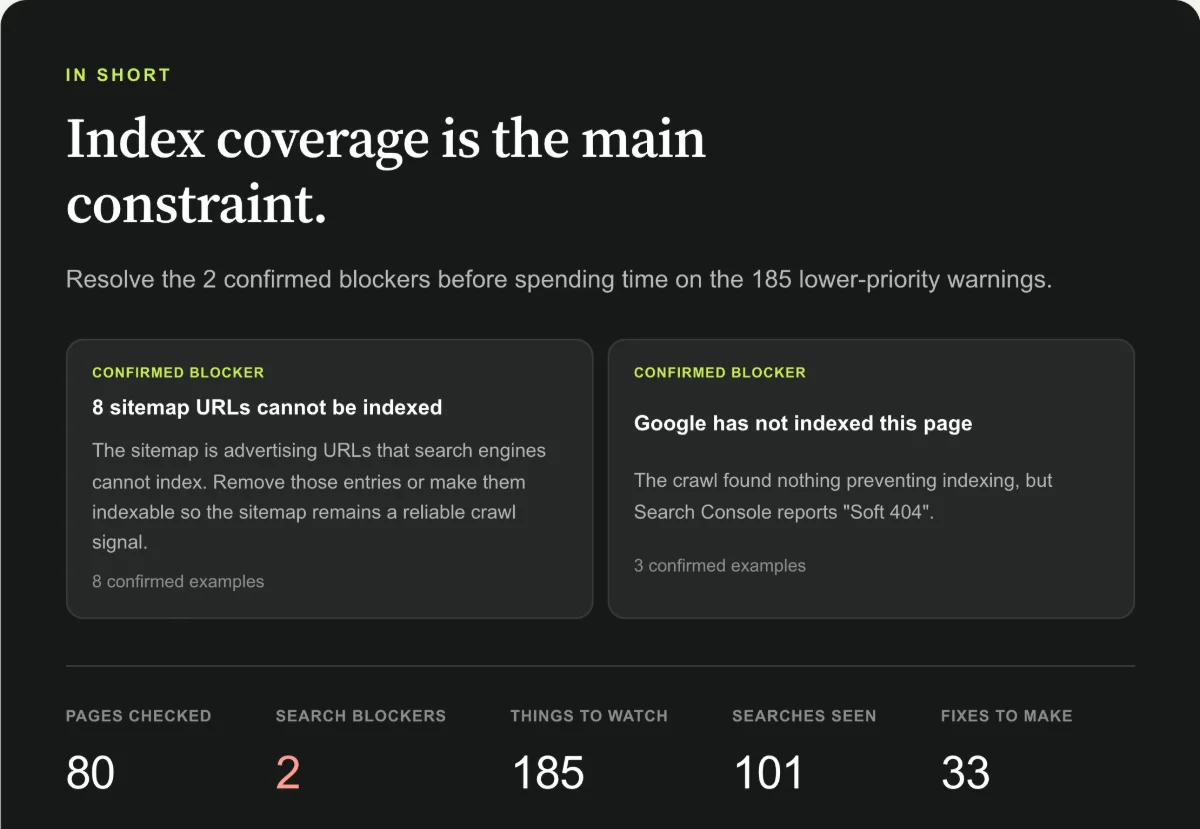
A crawl checked against Search Console. Confirmed blockers come first; the warnings can wait.
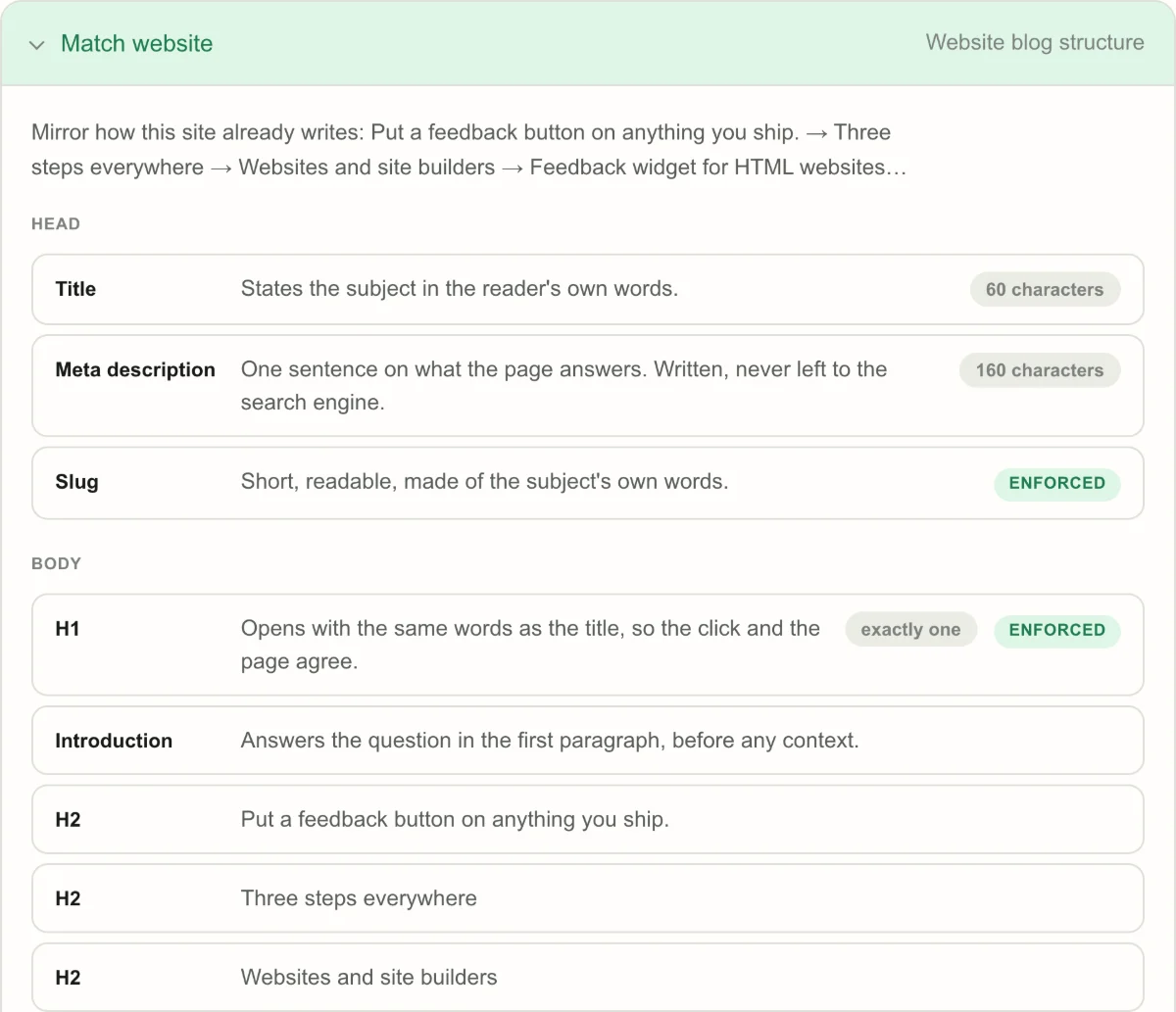
The outline mirrors your existing posts, and anything the audit found your site getting wrong is enforced.
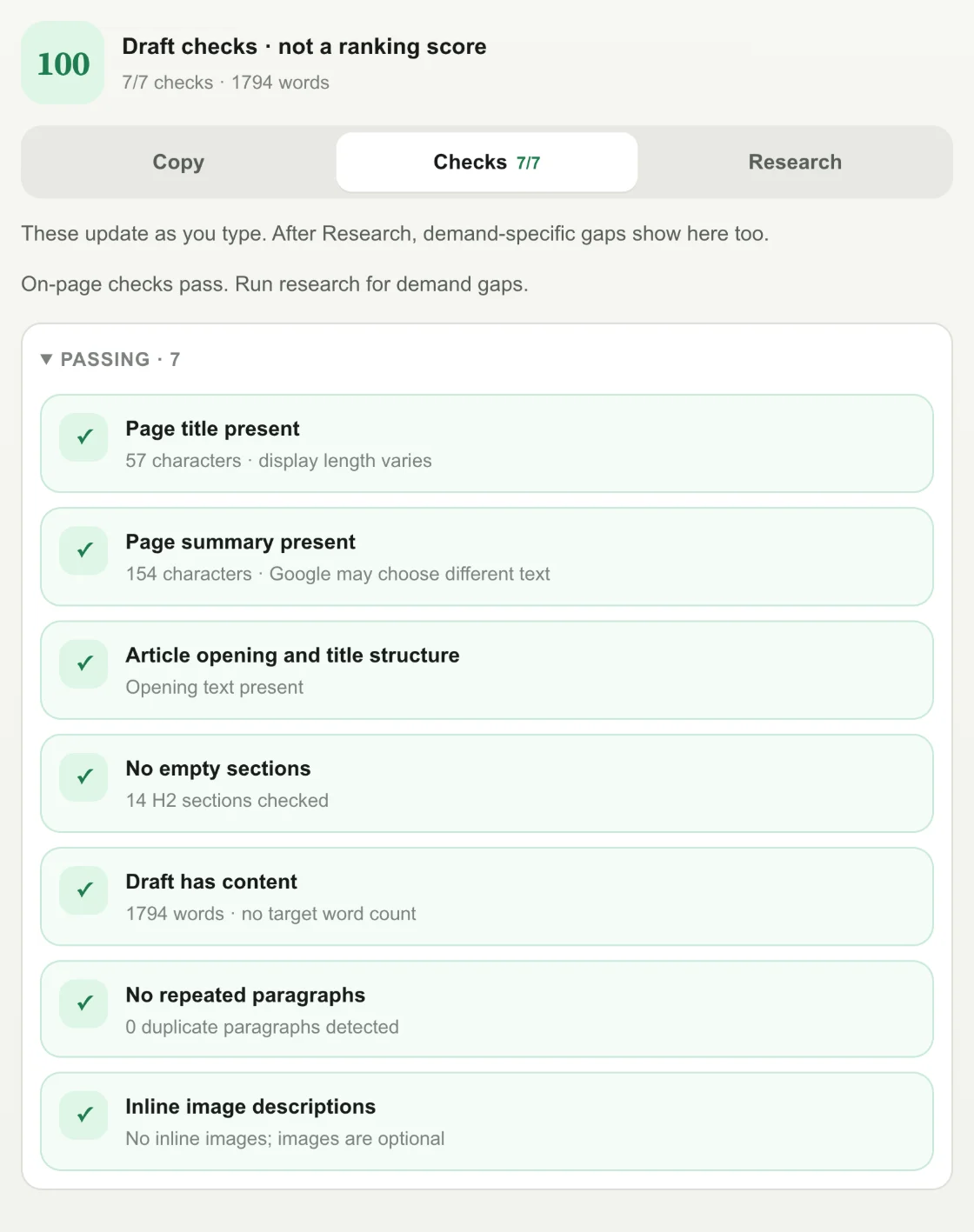
Title and summary length, structure, empty sections, repetition and image text. A checklist, not a ranking score.
Why SEO Dispatcher
A keyword list says what might work for any site. Search Console shows the searches Google already shows your site for, and those are the ones a better post can win.
The output
This is the pull request SEO Dispatcher opened for TellTide on 24 July 2026. One MDX file in the folder the site already used, merged and live the same day.
+ ---+ title: "In App Feedback Tools for SaaS: Personas & Buyer Triggers (Who Buys and Why)"+ description: "Learn how to choose in app feedback tools for SaaS by mapping…"+ ---++ Put a feedback button on anything you ship.++ ## Three steps everywhereStraight answers
Two places people look, and one place you own. Google: a better shot at ranking for searches you already almost win. AI answers: a clearer page that ChatGPT, Claude, Gemini, Perplexity, Grok, and similar tools can quote. Your site: the post is a file in your repo, not a page we host.
No tool can guarantee a citation in those products. We write and check the page the way those systems like to read it — clear answers, FAQs, valid Article and FAQ markup — then publish it on your site. We do not submit URLs to ChatGPT or Claude, and we do not show a “cited in Perplexity” score.
No. There is no embed script, no subdomain, no rendering layer. We write a file into your GitHub repository and your existing site deploys it. If you stop using SEO Dispatcher tomorrow, every post you shipped is still just a file you own.
Title and description length, headings, keyword placement, content depth, internal links, and FAQ readiness — scored against the search you are targeting and the pages currently outranking you. When Google Search Console or Analytics is connected, the audit can also use real query and traffic data.
Connect Google Search Console. We rank the queries you already get seen for, then write a blog aimed at the strongest gap — not a random topic.
Yes, behind a second confirmation. The default is a pull request so a human reviews before anything reaches your live site.
Get started
Connect it with GitHub. SEO Dispatcher finds the searches you almost win, drafts the posts in your site’s format, and ships them to your repo.
Plans from $19/month · 7 days free · Cancel anytime